
The 3-Step Reset for Regaining Your Momentum
Losing momentum is frustrating. Whether it happens after a chaotic project, a period of burnout, or months of constant distractions, getting back on track requires more than simply trying harder.
Many people attempt to fix everything at once. They create ambitious plans, overload their schedules, and push themselves relentlessly—only to burn out again. The reality is that rebuilding focus and productivity is a process. You need to gradually evolve your approach as your discipline and clarity return.

The following 3-step framework can help you regain momentum, reconnect with your goals, and build a sustainable way of working.
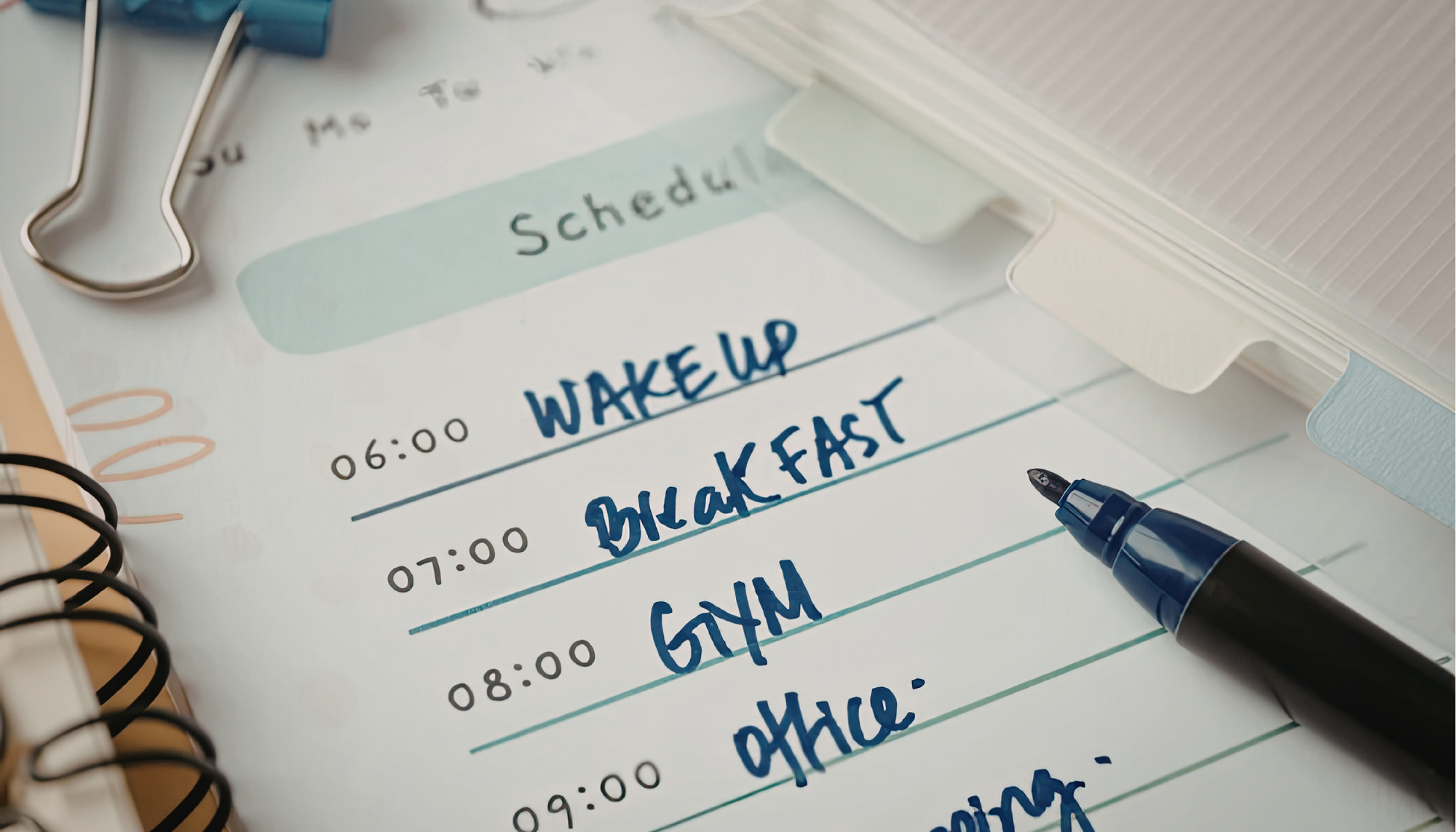
1. Rebuild Your Baseline with Strict Routines
When you are completely off track, you cannot rely on inspiration or good intentions. You need structure.
Start with a highly disciplined routine designed to eliminate decision fatigue and create consistent action. This phase requires clear rules, daily check-ins, dedicated work blocks, and unwavering consistency. Think of it as physical therapy for your productivity or a hard reset.
By removing choices about when and how you work, you reduce mental friction and make action easier. The goal is not perfection. The goal is to rebuild your baseline discipline and create enough stability to regain clarity.
At this stage, simplicity is your advantage. Focus on executing a small number of critical habits every day rather than trying to optimize everything at once.
You're ready to move to the next stage when: your core habits feel consistent, your priorities are clear, and taking action no longer requires constant effort or negotiation with yourself.
2. Connect Your Daily Tasks to Your Vision
A strict routine is an effective recovery tool, but structure alone is not enough. If your daily actions are disconnected from a larger purpose, discipline eventually starts to feel mechanical.
Once your habits are stable, take time to reconnect your daily activities to your long-term goals. Ask yourself why each important task matters and how it contributes to the future you are trying to create.
When you understand the connection between today's actions and tomorrow's outcomes, motivation shifts from forced compliance to meaningful commitment. The work no longer feels like something you have to do—it becomes something you choose to do because it aligns with your vision.
For example, a daily writing session may feel insignificant in isolation. However, when viewed as a building block toward publishing a book, growing a business, or establishing expertise, that same habit gains purpose and importance.
You're ready to move to the next stage when: you can clearly explain how your daily actions support your larger goals and no longer rely solely on rigid systems to stay engaged.
3. Graduate from Routines to Guidelines
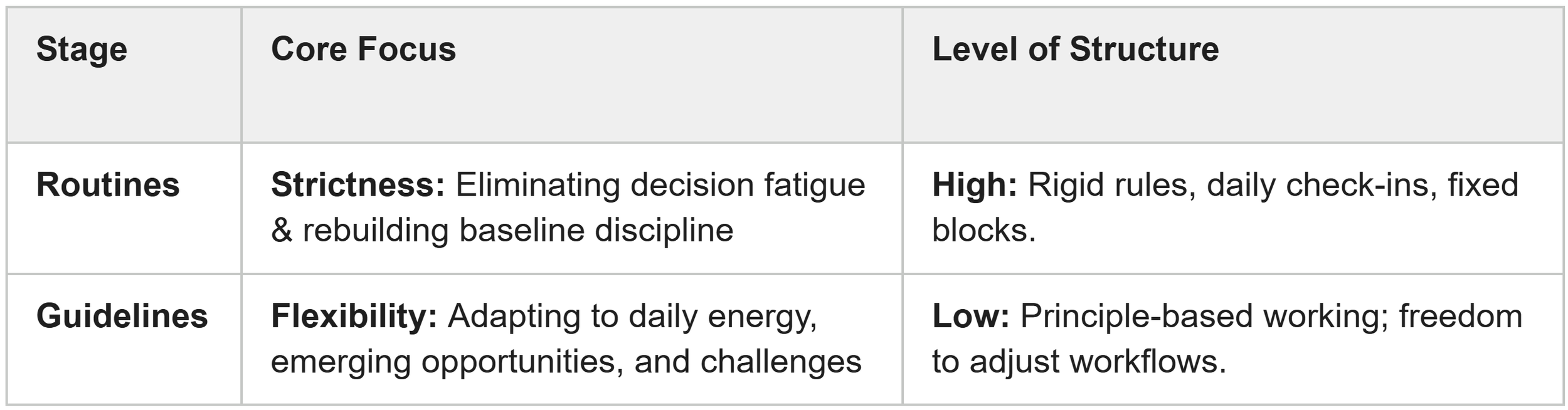
Once you have rebuilt discipline and reconnected with your vision, you can begin introducing flexibility into your workflow.
This is where many people want to start, but flexibility only works when it is supported by strong habits. Without discipline, flexibility becomes inconsistency.
Instead of following rigid hourly schedules, operate using guidelines and principles. You know what needs to be accomplished, but you allow yourself the freedom to adjust when and how you execute based on your energy, priorities, and circumstances.
Because your foundation is strong, you can move tasks around without abandoning them. You can adapt to opportunities, changing demands, and unexpected challenges while maintaining progress toward your goals.
The danger in this phase is complacency. Flexibility requires self-awareness. You must continue protecting your most important commitments and resist the temptation to let standards gradually decline.
A Key Reminder
These stages are not permanent. Even high performers return to stricter routines during periods of stress, transition, or declining performance. The goal is not to avoid structure forever; it is to use the right amount of structure for your current situation.
Imagine someone who has fallen behind on their professional goals after several months of burnout.
They begin by committing to a simple routine: waking up at the same time each day, exercising three times per week, and spending one focused hour on their most important project every morning.
After several weeks, those habits become consistent. They then reconnect those actions to a larger vision, such as earning a promotion, launching a business, or changing careers.
As confidence and discipline return, they replace rigid schedules with flexible guidelines. Instead of working on a project at exactly 7:00 a.m. every day, they commit to completing a meaningful block of focused work whenever it best fits the day. The habit remains; the execution becomes more adaptable.

Final Thoughts
Getting back on track is not about finding the perfect productivity system. It is about rebuilding momentum in stages.
Start with structure to restore discipline. Connect your actions to a meaningful vision to create sustainable motivation. Then, as your discipline strengthens, earn the flexibility to work dynamically without losing focus.
The goal is not to live under rigid routines forever. The goal is to build enough discipline that flexibility becomes an advantage rather than a liability.
Structure creates momentum. Purpose sustains it. Self-awareness protects it.