I’m already exhausted and it’s not even noon yet: How To Tackle Decision Fatigue
If you’ve ever caught yourself thinking this before lunch, you’re not alone. The tiredness you’re feeling isn’t always about a lack of motivation or discipline—and it’s not a personal failure. More often than not, it’s something called decision fatigue.
Decision fatigue happens when your brain becomes mentally drained from making too many choices in a short amount of time. By midday, you may already have made dozens—if not hundreds—of decisions, many of them small and seemingly insignificant. But every one of those choices takes a toll.
It’s not motivation. It’s mental overload.
From the moment you wake up, your brain is already at work:
What should I wear today?
What should I eat?
How should I reply to this message?
Should I do this task now or later?
Each decision pulls from the same limited pool of mental energy—the cognitive resources responsible for planning, prioritising, impulse control, and judgment. While one choice on its own may feel trivial, the cumulative effect adds up quickly.
By the time you’re faced with decisions that actually matter—strategic work, problem-solving, or important conversations—your brain may already be running on empty.
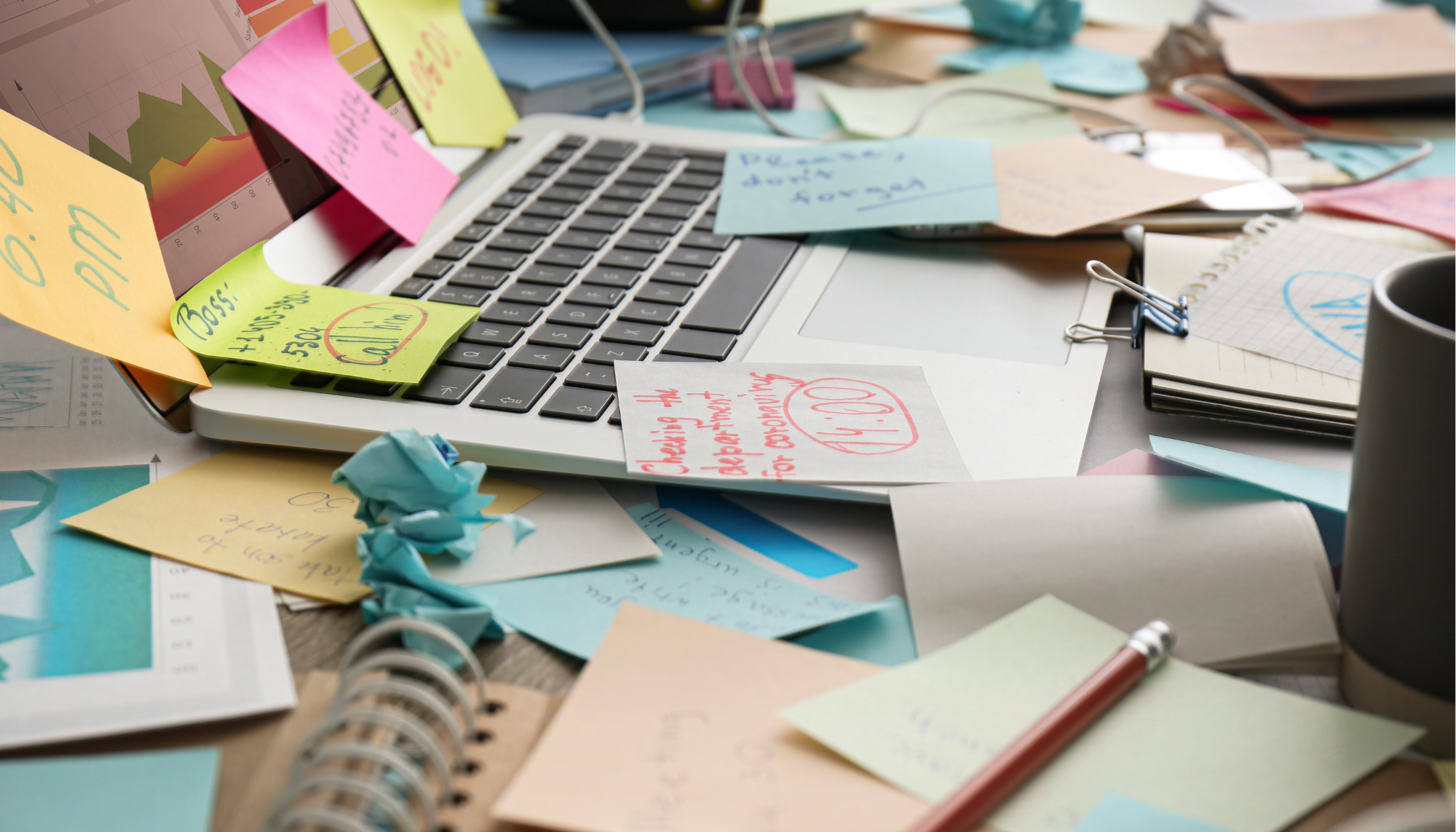
What decision fatigue looks like in real life
Decision fatigue doesn’t always announce itself clearly. Instead, it often shows up as:
Procrastinating on simple tasks
Overthinking small or routine choices
Making impulsive decisions you later regret
Avoiding decisions altogether
This isn’t laziness. It’s your brain trying to conserve energy by taking shortcuts—or shutting down where it can.

Why fewer decisions lead to better productivity
Our brains are wired to conserve energy. When mental resources are depleted, the brain naturally defaults to the easiest option available—whether that’s delaying a task, choosing what’s familiar, or saying yes when you should say no.
Reducing decision fatigue isn’t about doing more. It’s about deciding once and benefiting many times.
When predictable, everyday choices are simplified or pre-made, your brain no longer has to renegotiate them daily. This creates mental space for the work that actually requires clarity and creativity.
A simple but powerful strategy: automate the basics
One of the most effective ways to reduce decision fatigue is to automate routine decisions. For example:
Go-to outfits instead of choosing something new every morning
Meal prep or repeat meals to remove daily food decisions
Set workout routines rather than deciding how to exercise each time
A standard grocery list that rarely changes
A consistent morning ritual to start your day on autopilot
These systems don’t limit you—they support you. When the basics are handled, your brain gets a break.
Save your energy for what truly matters
Mental energy is a valuable resource. Spend it where it creates the most impact:
Creative thinking and idea generation
Complex problem-solving
Important conversations and people decisions
Long-term planning and strategy

By reducing the number of low-impact decisions you make each day, you give your best thinking the space to show up when it counts.
Productivity isn’t about doing more
True productivity isn’t measured by how much you squeeze into a day. It’s about making fewer, better decisions—and protecting your focus so it’s available for meaningful work.
When you feel exhausted before noon, it may be a signal to simplify, not push harder.

Want to build routines that protect your focus instead of draining it?
If you’re ready to work smarter, get in touch with us to learn more about our Productivity training.